Top Nutrition Tips for School-Age Children
Parents usually think about and prioritize a child’s school, their homework, and their screen habits, but what about the nutritional value that is needed in their early ages, especially? Parents unusually talk about this when a child can’t concentrate on studies, gets sick often, comes home in a bad mood daily, or something goes wrong.
But it is significant to understand that it does not work like that. What your child eats shapes how their brain functions, how their body grows, and honestly, how they feel about themselves. If your child attends the best CBSE school in Jaipur or a top international school in Jaipur, the quality of their education matters. And with that, what they are getting to eat matters too. Both things are true at once.
This is a practical children’s nutrition guide for parents that do not want to know about complicated meal plans but want advice about what actually works.
Why Food and Focus Are Directly Connected
The reason why food and focus are directly connected is the brain, which consumes 20% of the energy your child consumes because it is the hungriest organ in the body. When children eat good food, energy is produced more and thinking is sharper. But when they consume junk, focus drops. It is not a big problem but worth taking seriously.
A proper balanced diet for kids is not just about keeping energy levels high but also playing a significant role in memory, attention, and mood. When students sit in an exam for a continuous two hours, they recall everything they studied directly tied to the nutritional value they consume.
And with Screen Time, stress & studies pulling kids in every direction, the body needs real fuel, not processed shortcuts.
A Balanced Diet for School-Age Children
A balanced diet does not need to be perfect. The important thing is to follow basic nutrition habits regularly.
Protein: Foods such as eggs, dal, paneer, curd, and nuts provide protein. Protein sources are important as they help in building muscles, strengthen immunity, and support brain functioning. If your child does not take enough protein, a child’s body and mind cannot work at their best.
Carbohydrates: Choose the right food to gain carbohydrates, like whole grains, brown rice, oats, and whole wheat roti, which release energy slowly and make your child feel active during the whole day. Foods like white bread and sugary cereals give energy very quickly but make children feel tired soon after eating.
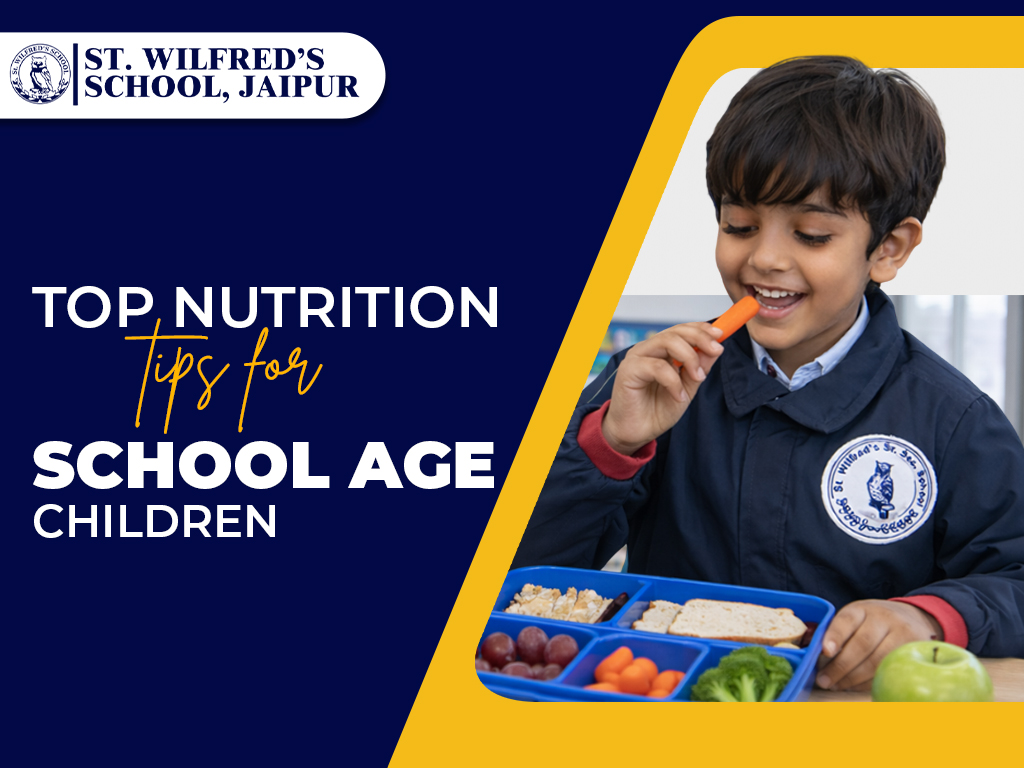
Fruits and Vegetables: Children should eat about 4 to 5 servings of fruits and vegetables every day. For instance, have an apple at the time of breakfast, vegetables at lunch, and dal with vegetables at dinner. If they take meals in this way, it will help to reach the goal.
Healthy Fats: If children consume foods like walnuts, flaxseeds, and small amounts of ghee, they consist of healthy fats such as omega-3, which help in brain development and emotional balance and help children dealing with school stress and screen time.
Screen Time and Academic Pressure: Effects on Children’s Nutrition
This is very important to discuss because too much screen time and academic pressure affect the eating habits of children. When children are feeling anxious, the body releases a hormone known as cortisol. Now cortisol increases cravings for fatty and junk food. That is why children who feel stressed or overwhelmed often eat junk food while using a screen.
Many good schools , including some of the top international CBSE schools in Jaipur and the best CBSE school in Jaipur, are prioritizing student wellness so that they do not consume unhealthy items. These schools also encourage physical activity and good eating habits because these directly affect the health of children.
Parents should take care of these small things; one simple rule helps your children a lot. Avoiding screens during meals can greatly improve eating habits and attention to food of children.
The Micronutrients Most Parents Miss
Good healthy eating for children means covering micronutrients too. These are the ones that slip through most commonly:
- Iron: If your child feels low iron, it means low concentration. To improve iron in your body, have spinach and jaggery. For better absorption, pair it with vitamin C, like orange, amla, and cauliflower.
- Calcium and vitamin D are important for bones that are still forming. Consume dairy products and ragi, and be safe from sun exposure every day.
- Zinc: immune health and wound healing. Pumpkin and chickpeas.
- Vitamin B12: energy and nerve function. Eggs, dairy, fortified cereals. Vegetarian kids often run low on this.
- Iodine: Iodine helps in brain development and proper growth in children. The easiest way to get iodine is by using iodized salt in daily food.
Mistakes Worth Avoiding
Even parents who are serious about diet for school-age children can also make small mistakes that create bigger problems in the future. Parents offering sweets as a reward and offering vegetables when they do not listen to them teaches kids that sweets are special and vegetables are punishment. Many of you force your children to finish their plates, overriding their natural hunger signals. Buying packaged snacks labeled as healthy without reading what’s in them also means you are offering junk to your children.
Conclusion
It is important to understand that you just need consistency; you don’t need a nutritionist and expensive meal plan. The environment where children get real food, regular meals, and enough water is needed as the foundation of balanced diets for kids.
Whether your child is at the best CBSE school in Jaipur, a top international school in Jaipur, or anywhere else, their ability to learn starts with daily eating habits.
Use this children’s nutrition guide as a starting point, not a rulebook. Pick one or two things to change this week. Do them well. Then build from there.