
How Yoga and Meditation Help Students Focus Better
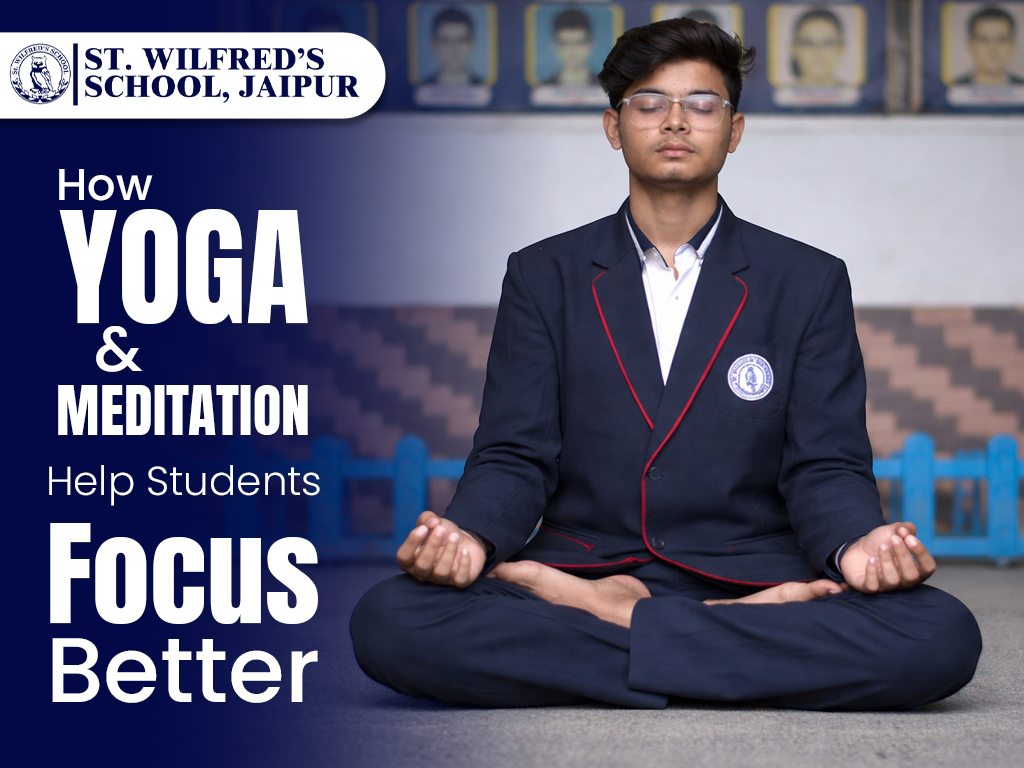
The overall health and attention span of the present generation are constantly declining due to a number of factors, such as smartphones, social media, and academic pressure. As a solution to stop this degradation, mental health experts as well as teachers advise that yoga and meditation are the best measures to stop this decline. The benefits of yoga and meditation in mental health and academics are not instantly seen among students, but are clearly visible when yoga is made a sustainable habit.
Benefits of Yoga and Meditation
Yoga and meditation influence multiple aspects of well-being among students, which is why children of all ages are made to participate in them at a CBSE school in Jaipur. Below are the most important areas where these practices make a measurable difference in the day-to-day life of students.
1. Mental Health
In the present time, the mental health of students suffers due to anxiety and academic pressure during exams. Yoga and meditation drastically help calm the mind by reducing excessive mental activity and improving emotional regulation.
- Reduces symptoms of anxiety and mild depression by 40%.
- Enhances emotional stability and resilience during exams or stressful situations
- Improves clarity of thought and decision-making ability
- Encourages a more balanced response to academic challenges
2. Physical Health
Yoga and meditation are two keys which help improve your physical health, too, rather than just mental health or stress. The physical health benefits include:
- Improving body posture
- Enhancing blood circulation, including oxygen supply to the brain
- Building flexibility in the body and reducing physical stiffness from prolonged sitting
- Improving the core strength of the body
3. Low Stress
Stress is one of the biggest barriers to concentration on studies and other tasks for a student. Chronic stress can impair memory, reduce attention span, and affect academic performance. According to various studies, doing meditation regularly can reduce stress in a student by 30%. The benefits of these activities on stress are:
- The parasympathetic nervous system is activated, shifting it to a rest-and-recovery mode
- Cortisol (primary stress hormone) levels are decreased
- Overthinking and mental clutter are reduced
4. Improved Focus
Yoga for focus is one of its best benefits. According to studies, the focus or concentration of students on any task, whether it be their studies in school or at home or anything else, is improved by around 33% due to regular yoga. This practice is helpful for focus because:
- It enhances sustained attention and reduces distractions
- It improves working memory, which is essential for learning new concepts
- It helps the students return to tasks quickly after interruptions
- It builds the ability to concentrate for longer durations over time
5. Self-Awareness
Self-awareness is important for students of all ages as it helps them understand their strengths, weaknesses, and emotional patterns, which is useful for them to improve themselves at every stage of life. Below are the benefits of boosting your self-awareness with yoga and meditation.
- Encourages mindful thinking and reflection
- Helps identify distractions and unproductive habits
- Improves emotional intelligence and interpersonal skills
- Supports better goal-setting and time management
6. Higher Energy and Activeness
Many youngsters or teenagers depend on stimulants like caffeine to maintain their energy and activeness for the day. However, building a habit of doing yoga and meditation daily gives them enough energy without the help of those stimulants, as it improves their internal balance. These activities help to:
- Reduce fatigue by improving oxygen flow and relaxation
- Increase alertness without causing restlessness
- Enhance motivation and engagement in daily tasks
- Maintain consistent energy throughout the day
How Can Meditation and Yoga For Students Improve Studies?
When you are finding a good school for your child and learning how to secure admission in a CBSE school, you would find that all of their facilities include making students regularly participate in yoga and meditation, helping in the improvement of their ability to learn, retain information, and overall perform academically. The following are some aspects which explain how meditation and yoga for students improve their studies.
1. Better Concentration During Study Sessions
Students often struggle to stay focused in a classroom or while studying at home for more than 20 to 30 minutes. Meditation trains the brain to maintain attention for longer periods, hence improving concentration. It helps by:
- Reducing multitasking habits
- Improving the ability to engage deeply with study material
- Enhancing productivity during shorter study sessions
2. Improved Memory Retention
Daily meditation improves the working memory and recall ability of students, reducing the errors students make in their studies by around 32%. Additionally, according to studies, the test scores of students doing regular meditation show a growth of over 40% compared to their results before doing meditation.
- Strengthens neural connections associated with learning
- Improves recall during exams
- Helps in the better organization of information in the brain
3. Reduced Exam Anxiety
Teachers recommend that students perform yoga or meditation daily when their exams are approaching. This is because high exam stress negatively impacts the performance of all students. According to several reports, around 75% of students who do yoga and meditation properly report low exam anxiety. Yoga and meditation help to keep this stress level at a low point by:
- Reducing nervousness before exams
- Improving confidence and mental clarity
- Helping maintain composure under pressure
How Can Students Start Yoga and Meditation?
Students wish to start yoga and meditation after knowing its many benefits. They should know that starting yoga and meditation does not require advanced skills or long hours. Their key benefits come from discipline and consistency. Here are some tips for students who wish to incorporate yoga and meditation in their daily routine.
- Start with simple techniques and stay consistent.
- Choose a distraction-free space for yourself
- Track your progress with patience
Conclusion
Yoga and meditation are not just wellness trends but are practical and research-supported techniques that improve the focus of students on daily tasks or activities, reduce stress, and enhance academic performance. Integrating these practices into their daily routine is helpful for children of all ages to slowly but eventually change their daily lives.
Enroll at St. Wilfred’s School, Jaipur, a place where students indulge in a lot of activities alongside yoga in the form of sports, with engaging learning activities that produce the best results seen in their personality, as well as report cards.
FAQs
Q. Does yoga help with focus and concentration?
Yes, yoga is one of the best activities to improve focus and concentration, as its regular practice calms the nervous system, boosts cognitive functioning and mental clarity, and increases blood flow to the brain, helping to improve focus and concentration as a result.
Q. Is yoga good for studying?
Yes, yoga is good for studying as it helps to improve concentration on studies, memory, retention of concepts, and cognitive flexibility.
Q. Is 30 minutes of meditation a day enough?
While the appropriate amount of time for meditation varies from person to person, 30 minutes of meditation a day is considered enough to get its benefits in the majority of cases.