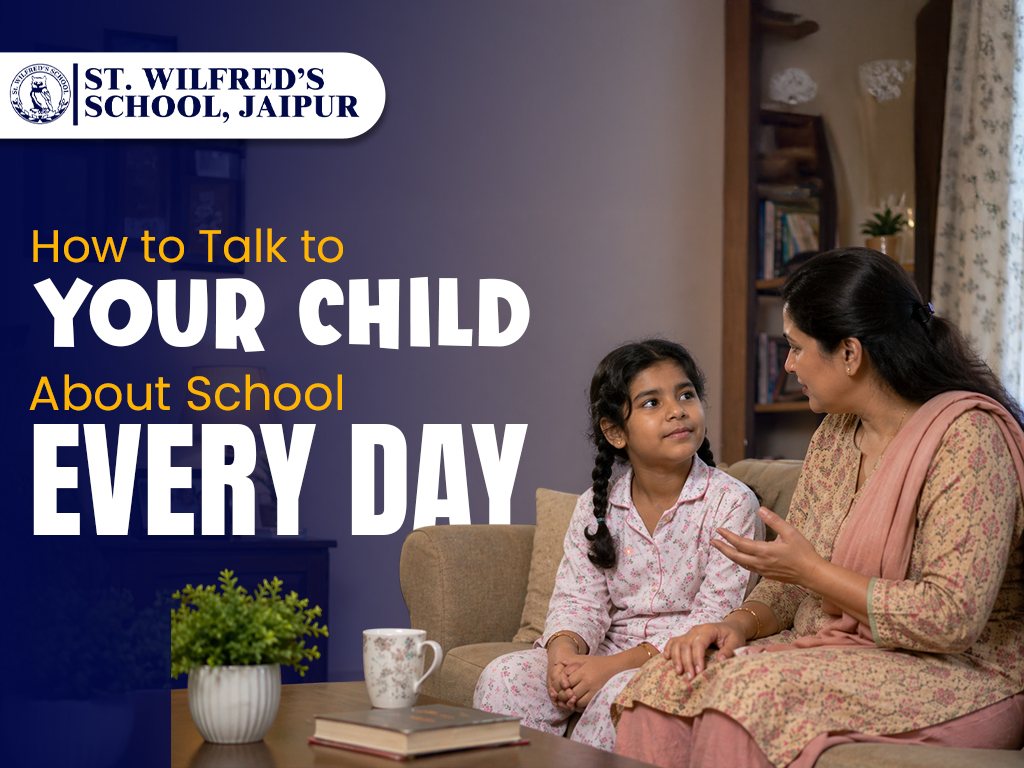
How to Talk to Your Child About School Every Day
Most parents ask the same question every evening: “How was school today?”
And most children give the same answer: “Fine.”
That one word closes the door before the conversation even begins. If this sounds familiar, you are not alone. Getting children to open up about their school day is something almost every parent struggles with, regardless of how close they are to their child.
The good news is that better conversations are possible. They just need a slightly different approach.
Why Daily School Conversations Actually Matter
Talking to your child about school is not just small talk. It is one of the most consistent ways to stay connected to their world. Children who feel heard at home are generally more confident, more willing to share problems early, and less likely to bottle up stress.
In a time when screen time, stress, and studies are among the biggest challenges modern students face, a simple daily check-in can serve as an emotional pressure valve. It tells your child, “I am interested.” I am here. You can talk to me.
That message, repeated day after day, builds something far more valuable than academic performance alone.
The Problem With “How Was School Today?”
The question is too broad. For a child who has just spent six to eight hours in school, processing everything that happened and summarising it into one answer is genuinely hard. They do not know where to begin, so they say nothing meaningful.
A better approach is to ask smaller, more specific questions that give your child an easy entry point into the conversation.
Try These Questions Instead
- “What was the most boring part of your day?”
- “Did anything surprise you today?”
- “Ask about their friend whom they sit with at lunch?”
- “Was there anything your teacher said that you disagreed with?”
- “What is one thing you are looking forward to tomorrow?”
These questions are manageable. They do not demand a full report. They invite a story, and stories lead to real conversations.
Creating a Safe Space for Kids’ Communication at Home
Before your child opens up, they need to feel safe doing so. Safe space for kids’ communication is not just a concept; it is something you build through small, consistent actions over time.
Here is what that looks like in practice:
Listen without jumping in. When your child shares something with you, do not immediately offer a solution or correct their thinking. Let them finish what they are trying to say. Ask a follow-up question. Show that their words matter and listen to them carefully.
Avoid turning every conversation into a lesson. If your child mentions a conflict and has mentioned a problem with a friend, and you immediately launch into advice mode, they will stop sharing. Sometimes they just want to be heard.
React calmly to difficult news. If your child tells you they failed a test or got punishment, your first reaction sets the tone for every conversation afterward. So make sure that a calm, curious response keeps the door open. Anger or disappointment shuts it.
Be physically present during the conversation. Put your phone down. Make eye contact. These small signals tell your child that this moment matters to you.
Finding the Right Time to Talk
Not every child is ready to talk the moment they walk through the door. Some need time to decompress first. Pay attention to when your child naturally becomes more talkative and build your conversations around that window.
For many families, quality time with children happens during meals, car rides, or the quiet time just before bed. These unstructured moments often yield better conversations than formal sit-down discussions.
The key is consistency, so try to communicate them in a short while. A few minutes every day adds up to something significant over months and years.
How School Environment Shapes What Your Child Shares
Children who study in schools that encourage expression and open-mindedness tend to bring that same openness home and feel free to share things with their parents. When a school nurtures curiosity, gives students a voice to express their thoughts, and creates a positive learning culture to enhance their thinking, children come home with more to say and more confidence to say it.
Parents looking for the best CBSE school in Jaipur often prioritise institutions that go beyond academics and also foster students’ personalities. These schools not only prioritise grades but also skills, where teachers know students by name, where emotional wellbeing is not just vague talk but is taken seriously, and where children are encouraged to think and question, developing critical thinking. The right school environment becomes a natural extension of the conversations you build at home.
When Your Child Refuses to Talk
There will be days when your child simply does not want to talk, and at that time, you need to understand that it is completely normal. Do not push. Instead, stay nearby and motivate them. Do something together, cook, watch something, or take a short walk, which rejuvenates their mood. Sometimes conversation happens naturally when there is no pressure.
If your child consistently seems withdrawn, anxious, or reluctant to discuss school for an extended period, it may be worth gently probing or speaking with their teacher or school counsellor. Occasional silence is normal. Prolonged withdrawal usually signals something worth addressing.
Conclusion
You do not need a perfect script to connect with your child about school. You need consistency, patience, and genuine curiosity. Ask smaller questions. Listen without an agenda. Build moments of quality time with children into your daily routine rather than treating it as a separate task.
Over time, these conversations become the foundation of a relationship in which your child feels safe bringing you the big things because you have always been interested in the small things.
Start today. Even a two-minute conversation done right can matter more than you think.
Frequently Asked Questions (FAQs)
Q1. Why does my child never talk about school?
Most children give short answers because broad questions like “how was school?” feel too big to answer, which they don’t like to do. Try asking specific, smaller questions about particular parts of their day to get the conversation going.
Q2. What is the best time of day to talk to my child about school?
It varies by child. Some open up right after school, others need time to decompress first. Meals, car rides, and bedtime are moments when many children naturally become more talkative.
Q4. How does screen time affect my child’s willingness to talk?
Excessive screen time can reduce face-to-face interaction, increase stress, and reduce knowledge retention. Setting boundaries around devices during family time creates more natural opportunities for conversation.
Q5. What should I look for in a school that supports my child’s emotional wellbeing?
Look for schools that encourage student voice, help students put their thoughts into practice, employ trained counselors, maintain small class sizes, and prioritise overall development alongside academics. The best CBSE school in Jaipur for your child will be one where they feel known and supported, not just assessed.